


 FAQ
FAQ
 Donate
 Shop
Shop
 Log In



Stay up to date
NFAA News
NFAA News
Apr 06, 2026
Bringing Orange Dots to Texas!
An idea for a new tournament format in Texas did not originate locally. It was brought back from experience elsewhere.
After attending the Western Classic Trail Shoot in Redding, California, organizers were introduced to a style of shooting that immediately stood out. The concept of aiming at clearly marked orange dots on 3D targets, combined with a wide range of distances from just a few yards out to beyond 100, created a unique blend of precision and excitement. “It was challenging but also extremely fun,” said Jeremy Balderrama. Conversations with West Coast shooters about similar style events and the strong participation they attracted made it clear that this was not just a novelty. It was a format with proven appeal and one that had yet to find a foothold in Texas.
The motivation to bring the format to Texas was rooted in both opportunity and curiosity. Texas already has a strong and diverse archery community, with heavy participation in indoor, field, 3D, and other established disciplines. However, many of those shooters had never experienced an orange dot or safari style event. “I knew there was a large following here,” Balderrama explained, “and a lot of those individuals had probably never experienced this type of shoot.” The goal was not to replace existing formats, but to introduce something new that combined difficulty with enjoyment in a way that would resonate across shooting styles. At its core, the tournament was created to offer a different kind of challenge while keeping the experience fun and accessible.
.jpg)
The first event, held at Huaco Bowmen in Waco, Texas, in September 2024, proved that instinct right. Around 40 shooters showed up, an encouraging number for a new format. But what stood out more was the reaction. “During the tournament, many of them were asking when the next one was going to be,” Balderrama recalled. That early enthusiasm set the tone for what followed. Before the event had even concluded, a second tournament was scheduled for March 2025. Since then, two additional events have been held, with the most recent taking place in March of this year.
Like any new addition to an already crowded tournament landscape, the biggest challenges have been mostly logistical. Texas offers no shortage of archery events, and finding space on the calendar has been one of the most difficult hurdles. “There are only so many weekends in a year,” Balderrama noted, pointing to the constant balancing act of scheduling around club shoots, state organizations, and national competitions. Beyond scheduling, there were also practical considerations such as finding locations that could accommodate longer shots with challenging terrain, securing durable targets, and building courses that offered both challenge and variety.
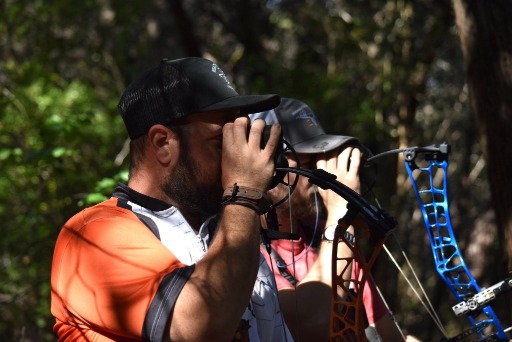
Those challenges were overcome largely through community support, and that support has been a defining part of the tournament’s success. Amanda Jarrett, her family, and her father Mike Miller, along with his wife, played a critical role in getting the event off the ground. Miller, a leader within Huaco Bowmen, made a significant early investment by purchasing the targets through the club with the understanding that entry fees would eventually help offset the cost. That investment proved worthwhile as participation grew and the targets held up for multiple events.
Balderrama also credits a broader network of support for helping bring the idea to life. Friends such as Doyle Ritchie, Eric Carlson, Steve Jones, and many others provided feedback, encouragement, and perspective during the early stages. “I bounced many ideas off of them and they gave me amazing feedback that was instrumental to the success we have had,” he said. Just as important have been the volunteers from Huaco Bowmen who consistently step in to build courses, set targets, drive stakes, and break everything down after the event. That collective effort has transformed what started as an idea into a sustainable and growing tournament.
As the tournament has grown, so has its identity. It has become known not just for its format, but for the atmosphere it creates. The combination of varied distances, simple scoring, and inclusive participation has drawn a wide range of shooters. Blind draw and team events have added another layer of engagement, and frequent shoot offs have brought excitement to the finish. More importantly, the tournament has maintained its original spirit, a balance between competition and enjoyment. “The most rewarding part for me is seeing people, especially those who have never shot this format, having a great time,” Balderrama said.
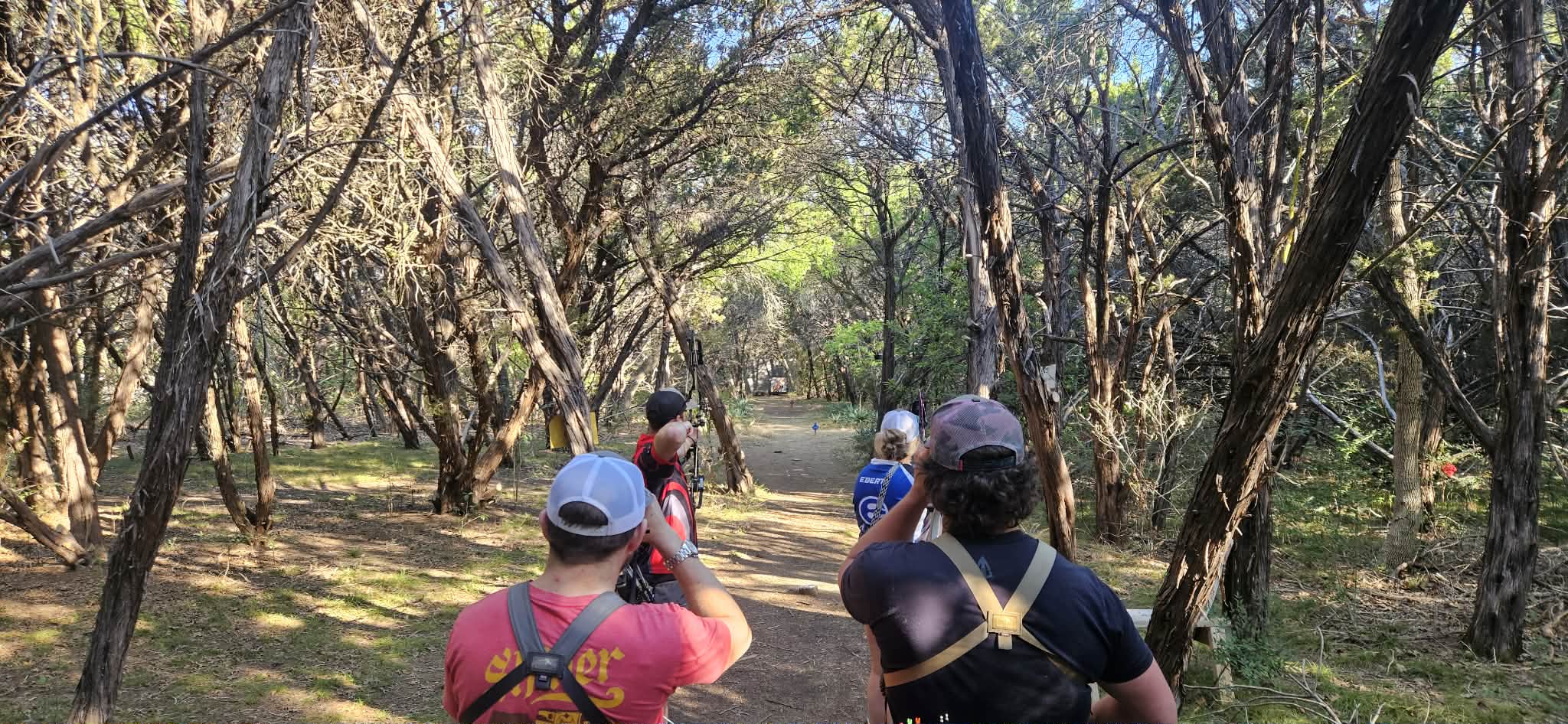
Looking ahead, the vision is to continue building on that momentum. The long-term goal is for this format to become a staple in Texas archery, an event that shooters prioritize and look forward to each year. “In three to five years, I hope it is something people absolutely do not want to miss,” Balderrama said. There is also interest in expanding beyond a single location and creating a series across multiple ranges similar to what has been successful on the West Coast. While challenges remain, particularly the upfront cost for clubs to acquire targets, the belief is that the investment will prove worthwhile as participation continues to grow. “We are on the right path,” he added. “It is just going to take time and getting more clubs involved.”
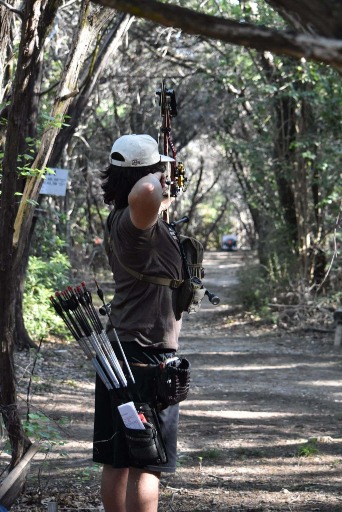
What started as an idea inspired by a trip out West has evolved into something uniquely Texan, built by the community, shaped by feedback, and driven by the simple goal of creating an event that is as enjoyable as it is challenging.